Finding the right pieces without endless scrolling used to take hours. The Usfans spreadsheet archive changed that for many of us who just want solid streetwear apparel and mainstream brands at sensible prices. Instead of jumping between random seller pages, you open one organized resource, type a single keyword, and land on options that actually match what you need. This guide walks through how the archive works, why people keep returning to it, and how to use it without the usual headaches.
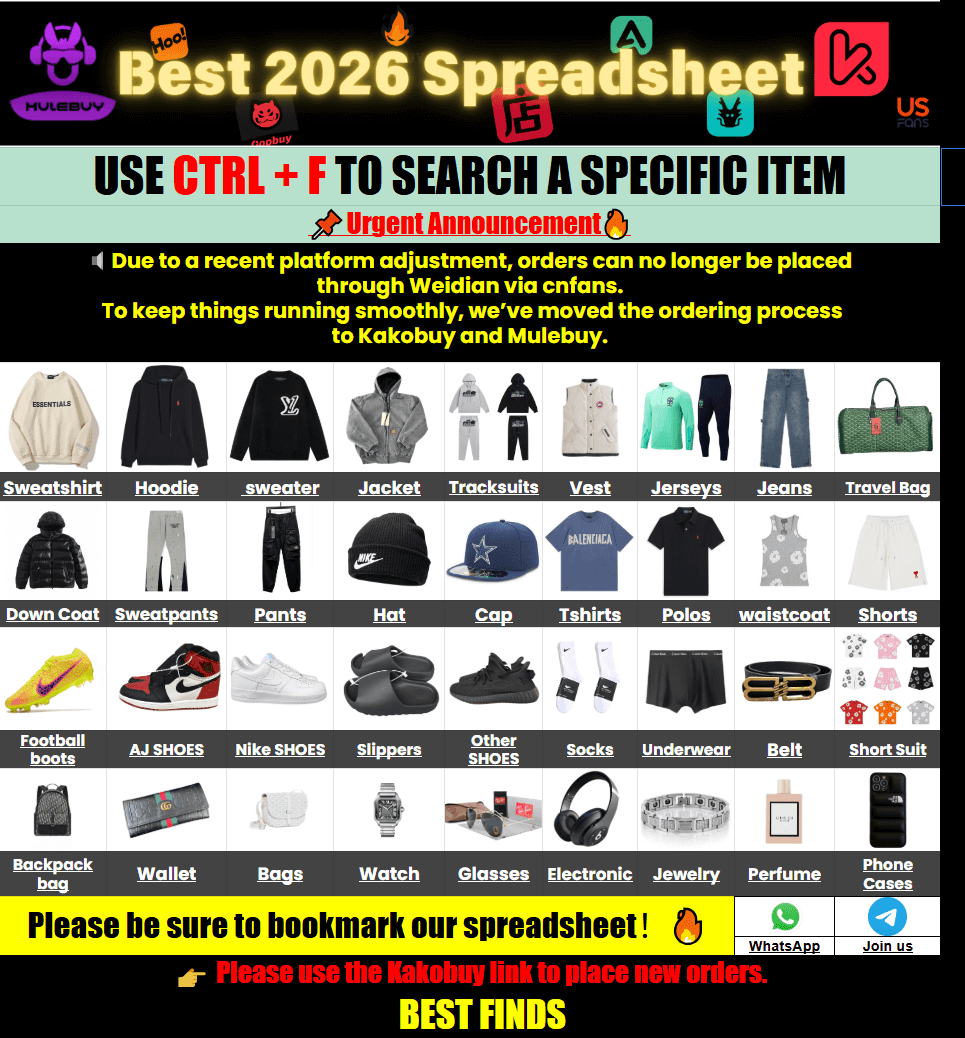
Smart Search Tip: Looking for more? To find items instantly, use single-word keywords (e.g., “SHOES” or “T-SHIRT”) instead of long sentences for the best results.
Recommended next step:For the full updated collection and batch details, head over to the main resource: Usfans Spreadsheet best batch
Jump to section:
What is the Usfans Spreadsheet Archive?
Think of it as a living catalog rather than a static list. The Usfans spreadsheet archive gathers product links, seller notes, available sizes, and photo references into one place so you can move faster. It is not an official store. It is a community-maintained reference that points to options already listed on common purchasing platforms. The value sits in the organization: categories stay consistent, new drops get added, and older links get cleaned when they stop working.
Most people who use it regularly started the same way I did—tired of opening ten browser tabs just to compare a hoodie. Once the archive became the first stop, the process shortened. You open the sheet, filter or search, check the notes, and decide. That simple loop is why it keeps getting updated.
What is its relationship with Usfans?
Usfans itself is one of the purchasing agents many international buyers already know. The spreadsheet archive is not run by the agent. It is an independent collection that tracks products people have successfully ordered through agents like Usfans and similar services. The relationship is practical: the archive makes the agent’s catalog easier to navigate, while the agent handles the actual buying, warehousing, and shipping.
You still place the order through the agent’s system. The spreadsheet only saves you the time of hunting for the right product page and reading scattered reviews. When a batch updates or a seller changes stock, regular users often leave notes in the sheet so the next person does not waste a QC request on something that no longer matches.
How do I search for items I want to buy?
The fastest method is still the simplest. Open the archive, go to the search bar or filter column, and type one clear word. “SHOES”, “HOODIE”, “JEANS”, or “WATCH” usually returns better results than full sentences. Long phrases often miss matches because the sheet is built around short, consistent tags.
Once you have a shortlist, check three things in order:
- The size notes or manufacturer dimensions if they are listed.
- Any recent QC photo links.
- The seller or product code so you can paste it straight into the agent search.
If the sheet has brand or category navigation tabs, use those first. They cut the noise before you even type. After a few sessions the layout becomes muscle memory.
For a broader view of similar organized resources, many buyers also keep Kakobuy spreadsheet with QC and Litbuy Spreadsheet bookmarked. Cross-checking a couple of sources is normal and usually takes only a couple of extra minutes.
What types of products are available?
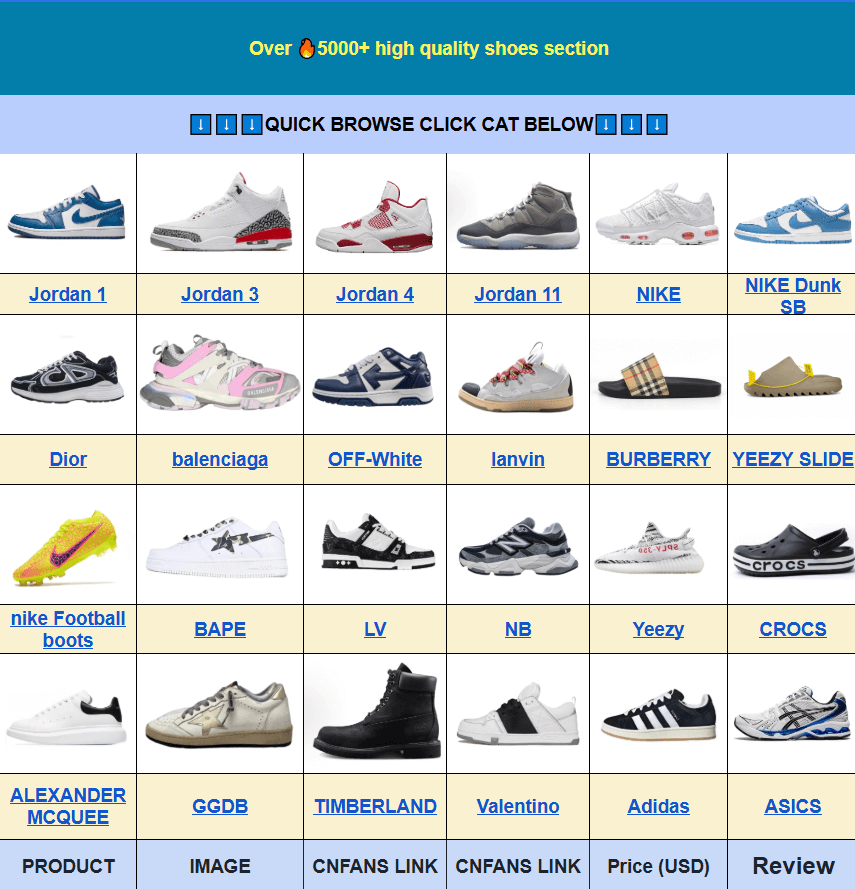
The archive covers the usual categories most streetwear and everyday fashion buyers look for: sneakers, hoodies and sweaters, T-shirts, jackets, pants and shorts, sets, headwear, accessories, and a growing number of lifestyle items. You will also find entries for watches, glasses, and occasional limited drops.
One useful category that matches the “other stuff / lifestyle” side of shopping is listed here for quick access: kakobuy spreadsheet other-stuff. It sits alongside the more focused apparel sheets and helps when you need something outside the core clothing list.
Because the archive is maintained by users, the depth varies by category. Sneakers and hoodies tend to have the most notes and photo links. Newer or niche items appear with thinner information at first and improve over time as more people order and leave feedback.
How is the product quality? Are there QC photos?
Quality is never uniform across every seller, which is why the QC step matters. Most entries in a well-kept archive include or link to quality-check photos taken after the item arrives at the warehouse. Those photos let you see stitching, logos, color accuracy, and overall construction before the package leaves for your country.
From personal experience, the photos that include both close-ups and a full product shot are the most useful. If a listing has no recent QC, many buyers simply request one through the agent before approving shipment. That small extra step removes most of the uncertainty.
Budget-friendly versions and affordable variations will never match every detail of mainstream brand pieces, yet many smart shoppers find the gap acceptable once they have seen clear warehouse photos. The archive’s job is to surface those photos quickly so the decision stays informed rather than hopeful.
Quick comparison: why people keep using the archive
| Aspect | Using the Archive | Searching without it |
|---|---|---|
| Time to locate options | Usually under 5 minutes with single-word search | Often 20–40 minutes across multiple tabs |
| Access to QC photos | Linked or noted in many entries | Must request or hunt separately |
| Category clarity | Consistent tabs and tags | Depends on each seller’s naming |
| Mobile usability | Works in browser; search still effective | Same, but more scrolling required |
| Update frequency | Community-driven, often weekly | No central update |
The table above reflects the practical difference most regular users report. The archive does not invent better products; it simply reduces the friction of finding them.
Practical notes on shipping, returns, and first-time use
International shipping costs and delivery times depend on the agent’s chosen line and your country. Most buyers see estimates inside the agent dashboard after the item is weighed. First-time users often start with a small order to learn the flow—QC approval, parcel consolidation, and final shipping choice—before committing to larger hauls.
If an item arrives and does not match the QC photos or has clear defects, the usual path is to contact the agent’s support with the warehouse photos and order number. Policies vary, but documented issues are generally handled through return or refund processes offered by the platform.
The mobile version of most spreadsheet tools is simply the browser view. It is usable once you remember to search with single keywords. Landscape mode on a phone or tablet makes the columns easier to read.
Real questions from people who use the archive
Is the mobile version easy to use, and how do I actually search?
Yes for basic use. Open the sheet in your phone browser, locate the search or filter field, and type one word such as “JACKET” or “SNEAKER”. Avoid long descriptions. The results load faster and match more accurately. Pinch-to-zoom helps when columns feel tight.
What are the real benefits for first-time users?
You skip the trial-and-error of random seller searches. The archive already contains product codes and notes that other buyers found useful. Your first order becomes a learning run rather than a guessing game, and the QC photo step teaches you what to look for before anything ships.
Why not just use a regular Google Sheet or search engine?
A plain search engine returns everything—outdated links, unrelated results, and seller pages with no context. A community archive keeps the useful links in one place, adds notes about batches and sizing, and removes dead entries over time. The difference shows up after the third or fourth purchase.
Does the spreadsheet share user data?
The archive itself is a shared document of product links and public notes. It does not collect or store personal account information. Your actual orders, addresses, and payment details stay inside the purchasing agent’s system, which has its own privacy policy.
What should I do if the product I receive is unsatisfactory?
Open a support ticket with the agent using the order number and the warehouse QC photos. Clear photo evidence of the issue (wrong color, major stitching problem, damaged item) is the most effective way to request a return or compensation. Keep communication polite and specific.
How does it compare with other similar spreadsheet sites?
Some focus more on certain brands or update more frequently in specific categories. The practical advantage of a well-maintained Usfans-oriented archive is the consistent tagging and the volume of recent QC links. Many buyers keep two or three resources open and cross-check rather than relying on only one.
Is it safe to use?
The spreadsheet is a reference tool. Safety depends on the purchasing agent you choose and the payment method you use with that agent. Stick to established agents, review their buyer protection rules, and never share login details outside the official platform.
After using the archive for several months, the biggest change is simply speed. You spend less time searching and more time deciding. That shift is what keeps most people coming back—especially when new seasonal drops appear and the single-keyword search still surfaces relevant options within seconds.
Keep the main resource bookmarked, use the short search terms, check the QC notes, and treat the first couple of orders as practice. The process becomes straightforward once those habits settle in.