Sourcing items through foreign market directories often means wrestling with massive, laggy documents on a mobile phone. Comparing the performance of a dedicated web directory against traditional shared documents reveals critical differences in browsing speed, link maintenance, and visual verification capabilities. Analyzing the Kakobuy Spreadsheet Versus Google Sheets user experience shows how switching from unformatted grid rows to an organized web catalog eliminates frustrating loading delays and dead links. Utilizing optimized resource platforms like the Kako buy spreadsheet portal gives international shoppers direct access to structured product listings with embedded inspection images, turning a slow hunting process into a fast, reliable workflow.
Smart Search Tip: Looking for more? To find items instantly, use single-word keywords (e.g., “SHOES” or “T-SHIRT”) instead of long sentences for the best results.
Table of Contents
- The Sourcing Speed Crisis: Grid Files vs Modern Web Catalogs
- Side-by-Side Performance and Workflow Breakdown
- Data Integrity and Broken Link Management
- Visual Inspection and Quality Verification Integration
- Category Sourcing and Specification Checking
- International Shipping Considerations and Parcel Planning
- Frequently Asked Questions
The Sourcing Speed Crisis: Grid Files vs Modern Web Catalogs
Online shoppers exploring overseas supplier catalogs traditionally rely on community-curated Google Sheets containing thousands of rows. While these documents gather vast amounts of information in one place, they suffer from fundamental technical limitations. As a spreadsheet grows past several thousand entries with multiple embedded images, external links, and conditional formatting rules, browser memory consumption spikes dramatically.
For users on mobile devices or lower-bandwidth connections in regions like Western Europe, North America, or Australasia, opening a massive sheet leads to frequent crashes, slow scrolling, and unresponsive search functions. A web catalog approach re-architects this raw data into a database-driven store format. Instead of downloading a massive 50-megabyte file into browser memory just to find a single jacket, the user loads lightweight HTML pages with paginated listings, instantly improving navigation speed.
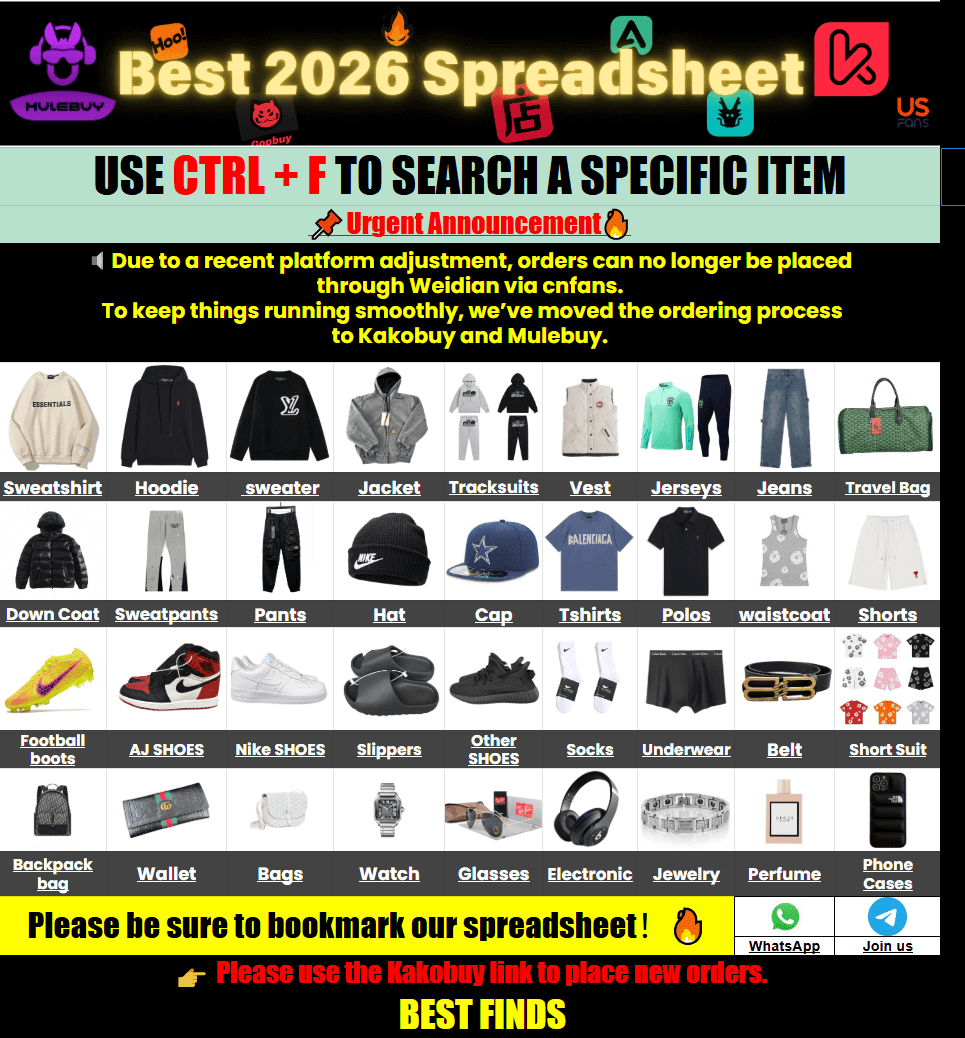
By replacing heavy client-side spreadsheet rendering with server-side database queries, shoppers can filter, search, and review sourcing information in fractions of a second rather than waiting for a spreadsheet to calculate rows.
Side-by-Side Performance and Workflow Breakdown
Evaluating the practical differences between browsing raw shared documents and utilizing a web-formatted sourcing catalog highlights several distinct operational advantages across daily use cases.
| Performance Metric | Traditional Google Sheets File | Structured Web Catalog |
|---|---|---|
| Mobile Responsiveness | Poor; requires horizontal panning, pinch-zooming, and heavy data usage | High; fully responsive grid layouts optimized for smartphone screens |
| Search Capability | Basic CTRL+F text matching across visible text cells only | Multi-attribute search with category tags and specification filters |
| Page Load Time | 10 to 30+ seconds for large community files containing thousands of rows | Under 1.5 seconds per paginated category or product entry page |
| Visual Previews | Small thumbnail cells or text links requiring external tab popups | Clean visual cards with integrated image galleries and detail pages |
| Link Validation | High prevalence of dead links, deleted store pages, and broken URLs | Automated link verification and regularly purged out-of-stock items |
This technical disparity directly affects how fast a buyer can move from item discovery to cart addition and warehouse dispatch. Eliminating friction during the discovery phase preserves time for the most critical step: reviewing physical product specifications.
Data Integrity and Broken Link Management
A persistent frustration when using community spreadsheets is link decay. Domestic Chinese marketplace sellers frequently update store listings, rotate product pages, or adjust pricing structures. When a seller updates a listing, the raw URL saved in a static spreadsheet cell instantly becomes a 404 error or redirects to a generic marketplace homepage.
Community sheets rely on volunteer maintainers to manually locate and update broken links row by row—a task that quickly falls behind due to the sheer volume of entries. In contrast, an active database directory utilizes automated link verification tools. Outdated URLs are flagged, updated, or temporarily hidden automatically, ensuring that shoppers do not waste time clicking dead links or navigating to expired offers.
Furthermore, web-based directories organize data using standardized taxonomy structures. Rather than relying on whatever text string an individual editor typed into a spreadsheet cell, products are categorized logically under validated headings, ensuring consistent navigation across every search.
Visual Inspection and Quality Verification Integration
In cross-border purchasing, quality assurance relies on pre-shipment photo verification. When using a raw Google Sheet, checking previously archived inspection photos usually means clicking a shortened external link that opens in a separate browser tab, taking you away from your main research session.
Web catalog platforms integrate visual inspection assets directly alongside product specifications. Having reference photos available directly on the catalog listing allows buyers to examine key visual quality markers without leaving the page.
When evaluating listings for footwear, such as items found in the dedicated Kakobuy Spreadsheet Shoes section, integrated visual records allow shoppers to inspect critical craftsmanship details before initiating an order through their chosen logistics agent:
- Outsole Bond Line: Examining seam junctions where the rubber outsole joins the midsole to check for excess adhesive or gaps.
- Stitching Alignment: Reviewing heel counters and eyelet panels for straight, consistent thread density without loose ends.
- Symmetry and Profile: Comparing left and right shoes side-by-side to verify matching toe box shapes and collar heights.
- Insole Measurement Tapes: Checking flat ruler photos laid inside the shoe to confirm exact length in centimeters rather than relying on tag sizes.
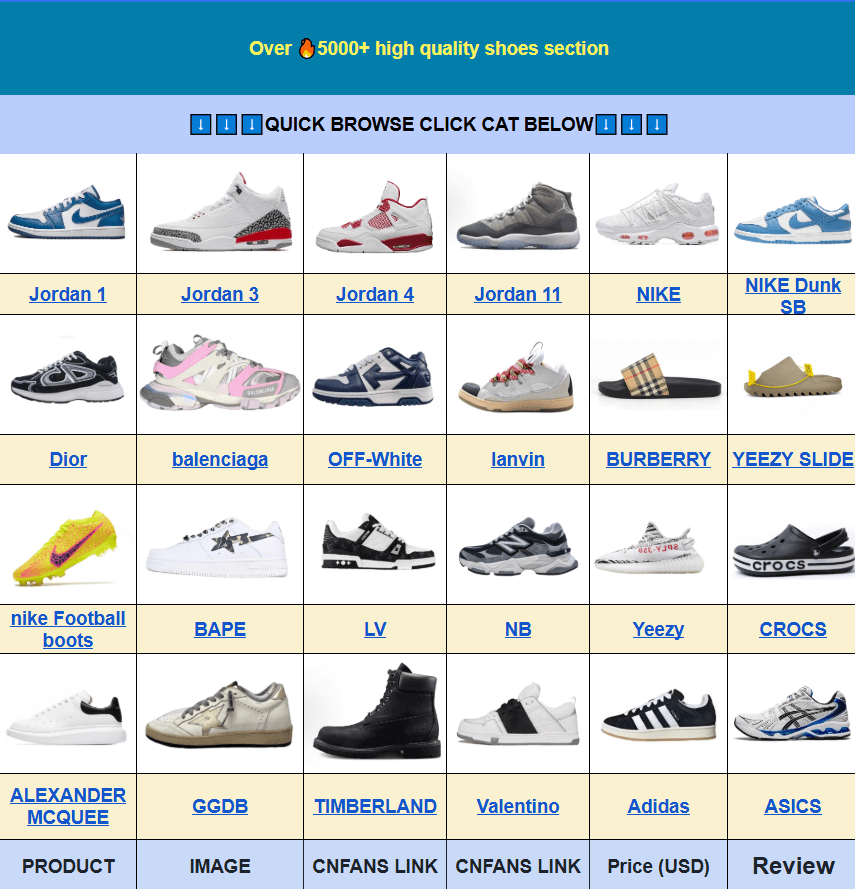
Integrating visual inspection data directly into the browsing experience ensures buyers make informed decisions, preventing unnecessary domestic returns once items arrive at the processing warehouse.
Category Sourcing and Specification Checking
Evaluating garments or technical goods requires analyzing concrete dimensions rather than generic size labels. Sizing conventions vary significantly between different production facilities and factory batches. A garment tagged as size Large from one manufacturer might measure identically to a size Small from another.
A structured catalog allows buyers to quickly compare manufacturer dimensions against flat-garment measurements before placing an order. Instead of squinting at poorly cropped size charts embedded inside raw spreadsheet cells, web catalogs present organized measurement tables clearly.
| Garment Area | Measurement Method | Why It Matters Before Ordering |
|---|---|---|
| Chest Width | Measured flat from pit seam to pit seam | Determines true fit across the torso regardless of tag size |
| Shoulder Span | Measured horizontally between shoulder seam points | Prevents restrictive shoulder movement or drooping seams |
| Total Length | Measured vertically from high collar seam to hem | Ensures the garment length matches your body proportions |
| Sleeve Length | Measured from shoulder seam down to cuff edge | Guarantees proper wrist coverage on long-sleeve items |
Checking these physical parameters against a well-fitting clothing item at home removes sizing guesswork, drastically reducing the rate of order exchanges at the warehouse stage.
International Shipping Considerations and Parcel Planning
Once items are selected through a web catalog and dispatched to the forwarding warehouse, planning the final international parcel requires strategic management. Parcel consolidation, weight thresholds, and volumetric dimensions directly influence total landed delivery costs to international destinations.
Buyers shipping to North America, Europe, Australia, or Asian destinations should keep key freight dynamics in mind during cart build-up:
- Volumetric vs Actual Weight: Bulky items like winter coats or heavy footwear boxes are often billed based on dimensional volume rather than dead weight. Removing retail shoe boxes at the warehouse packing stage can reduce billable parcel weight significantly.
- Route Selection & Customs Protocols: Different shipping lines handle local tax compliance and clearance procedures differently. Options operating under Delivered Duty Paid (DDP) arrangements clear customs seamlessly by collecting applicable VAT/GST upfront, minimizing import delays.
- Parcel Weight Bands: Freight forwarders often tier shipping rates in 500-gram increments. Combining multiple small accessories into a single consolidation build optimizes weight brackets and reduces per-item freight overhead.
Utilizing a fast, clear web catalog to discover items, combined with thorough pre-shipment photo inspections and thoughtful parcel consolidation, creates a efficient, reliable international sourcing pipeline.
Frequently Asked Questions
Q: What is the main advantage of a web catalog over a Google Sheet?
A: Web catalogs load significantly faster, offer structured search and filtering tools, work seamlessly on mobile devices, and maintain validated product links better than massive shared spreadsheet files.
Q: Is the Kakobuy resource catalog free to browse?
A: Yes, browsing catalog entries, reviewing specification details, and accessing quality control inspection guides on the platform is completely free for all users.
Q: How do I purchase an item found on the web directory?
A: Clicking a product entry redirects you safely to an external shopping agent platform where you can finalize the purchase, arrange domestic warehouse delivery, and manage international parcel dispatch.
Q: Are the product links updated regularly?
A: Yes, database directories run regular link validation checks to minimize broken URLs and remove unavailable marketplace listings, ensuring a higher success rate when clicking through to buy.
Q: Can I inspect photos of items before they are shipped overseas?
A: Yes, once your ordered item arrives at your forwarding agent’s domestic warehouse, staff capture detailed quality control photos allowing you to verify sizing measurements, color accuracy, and overall condition before paying for international freight.
Q: How does switching from spreadsheets to a web catalog help mobile users?
A: Large spreadsheets consume high amounts of device memory and mobile data, causing browser lag. Web catalogs serve light, responsive HTML pages designed specifically for quick mobile navigation and clean visual previews.