For first-time users, Kakobuy checkout and international shipping can feel more complicated than simply choosing an item and paying for it. The product price is only one part of the process. You also need to understand how sourcing links work, what happens during QC, when shipping is selected, how parcel weight affects the final cost, and what may happen when the shipment reaches your country.
This guide breaks the process into practical stages so you can move from a product listing to an international shipment without making avoidable mistakes. The goal is not to promise a particular delivery time or shipping price, because both depend on destination, parcel characteristics, carrier availability and current rules.
Smart Search Tip: Looking for more? To find items instantly, use single-word keywords (e.g., “SHOES” or “T-SHIRT”) instead of long sentences for the best results.
- What Actually Happens Between Finding an Item and Shipping It?
- Start With the Product Listing, Not the Checkout Button
- QC Review: What Can You Really Confirm?
- The Numbers That Matter Before You Build a Parcel
- How International Shipping Changes the Calculation
- A Lower-Risk Checkout Workflow for First-Time Buyers
- Common Checkout Mistakes That Create Extra Work
- Frequently Asked Questions
What Actually Happens Between Finding an Item and Shipping It?
The most useful way to understand the process is to separate product discovery from international fulfillment. A web catalog such as Kako buy spreadsheet is primarily a discovery and sourcing-information layer. It helps users browse products, inspect available information and find sourcing links more efficiently than working through a large spreadsheet.
The external shopping agent is where the purchasing and fulfillment steps take place. In a typical workflow, the stages look roughly like this:
- Find a product through the catalog or sourcing list.
- Open the product information and review the available specifications.
- Follow the relevant external purchasing link.
- Complete the purchasing process through the selected platform.
- Wait for the item to reach the agent’s warehouse.
- Review available QC photos or inspection information.
- Decide whether the item is suitable for inclusion in your parcel.
- Select an international shipping route when the parcel is ready.
- Confirm the shipping details and submit the parcel.
That distinction matters because the price displayed beside a product should not automatically be treated as the final landed cost. Product cost, domestic handling, international shipping and destination-country charges can belong to different stages of the process.
Start With the Product Listing, Not the Checkout Button
A common beginner mistake is to find an attractive listing and immediately think about payment. A better approach is to inspect the information first. This is especially useful when the listing contains several variations, colors or size options.
Before opening the external purchasing page, check:
- Product type: Confirm that the listing actually matches what you intended to source.
- Available variations: Check color, style, model and other selectable options.
- Measurements: Look for seller-provided dimensions instead of relying entirely on S, M, L or XL.
- Weight: If available, note the approximate product weight because shipping calculations may depend heavily on parcel weight.
- Seller information: Look for useful information about the listing and its current availability.
- Photos: Compare the listing images with the product description and selected variation.
If you are primarily browsing clothing, actual measurements deserve particular attention. For example, a shirt may provide chest width, garment length, shoulder width and sleeve length. These measurements are generally more useful than assuming a Chinese-market size label corresponds directly to your usual US, UK, EU or Australian retail size.
The same principle applies to footwear. Foot length and insole measurements can provide a more useful reference than simply selecting the size you normally wear. Manufacturers and sellers may use different sizing conventions, and even products that appear similar can have different dimensions.
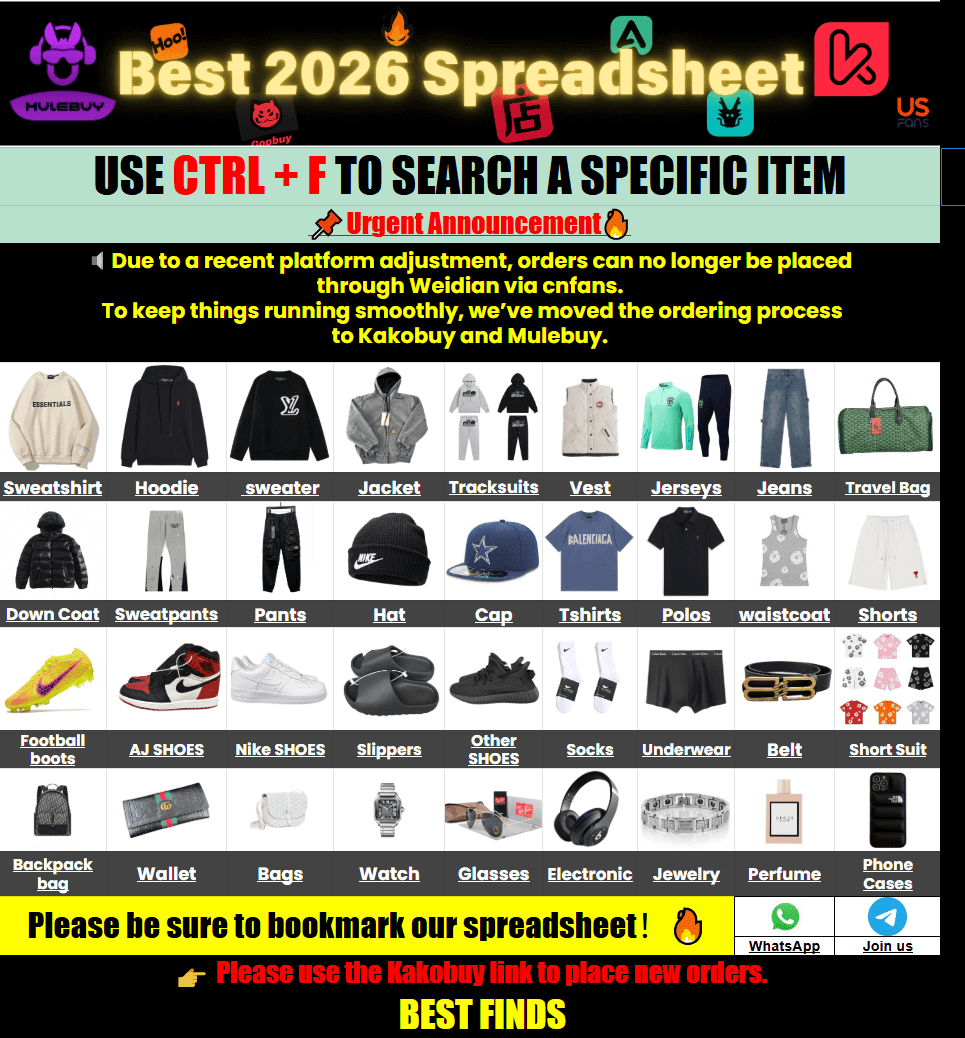
For a large product directory, category navigation can also save time. If you are researching sportswear, for example, browsing a focused product group can be more efficient than searching through unrelated listings. The same approach works for Kakobuy Jersey when your sourcing project involves football or sports jerseys.
QC Review: What Can You Really Confirm?
QC photos are useful because they give you another opportunity to inspect the item before international shipment. They should not, however, be treated as a laboratory test or a guarantee of long-term product performance.
For visible characteristics, a practical QC checklist includes:
| Checkpoint | What to Look For | What Photos Cannot Reliably Prove |
|---|---|---|
| Stitching | Loose threads, uneven seams or obvious construction problems | Long-term durability |
| Graphics and prints | Alignment, visible defects and obvious placement issues | How the print will age after repeated washing |
| Color | Obvious differences between product areas or mismatched components | Perfect color accuracy under different lighting |
| Shape | Uneven structure, visible distortion or asymmetry | Long-term fit after wear |
| Hardware | Zippers, buttons and visible fittings | Performance after extended use |
| Measurements | Whether photographed measurements appear consistent with the listing | How the garment will feel on your body |
Look at QC images with a specific question in mind. Instead of asking whether an item simply “looks good,” check whether there is a visible issue that would make you reject it. This creates a much more useful inspection process.
Also remember that a photograph cannot reliably establish fabric composition, chemical composition, long-term comfort or durability. Those characteristics require information or testing beyond ordinary warehouse QC photography.
The Numbers That Matter Before You Build a Parcel
Once several products have reached the warehouse, the shipping decision becomes partly a logistics problem. The key numbers are usually the individual product weights, estimated parcel weight, package dimensions and destination.
For clothing and soft goods, actual weight is often straightforward, but packaging can change the final parcel characteristics. Shoes, boxes, structured bags and other bulky products may take up substantially more space than lightweight garments.
International carriers may use either actual weight or a volumetric calculation depending on the service and package dimensions. That means a parcel containing relatively light but bulky products can sometimes cost more to ship than a heavier, compact parcel.
A useful pre-ship checklist is:
- Confirm which products you actually want to ship.
- Remove unwanted or unsuitable items before final parcel submission.
- Review the estimated total weight.
- Check package dimensions if the service provides them.
- Compare available routes based on destination and service conditions.
- Review any restrictions that may apply to the products in the parcel.
- Check the destination address carefully.
Do not optimize around the cheapest headline shipping number alone. A route may differ in service level, restrictions, tracking, estimated transit time and how duties or taxes are handled.
How International Shipping Changes the Calculation
Shipping from China to another country introduces variables that do not exist when buying domestically. The same parcel can have different considerations depending on whether it is traveling to the United States, Canada, the United Kingdom, an EU member state, Australia, New Zealand or another destination.
Customs treatment and tax arrangements vary by destination and can change over time. For that reason, international buyers should check the current official guidance applicable to their country rather than relying on an old spreadsheet entry, social-media post or forum comment.
Several terms are worth understanding:
- VAT/GST: Consumption taxes that may apply depending on the destination and transaction structure.
- DDP: A shipping arrangement where applicable duties and taxes are generally handled as part of the delivered shipment under the carrier’s or seller’s terms.
- DDU: A delivery arrangement where applicable import charges may remain the recipient’s responsibility.
- IOSS: An EU mechanism that can apply to certain low-value imported goods and is subject to specific eligibility and transaction conditions.
- Biosecurity: Countries such as Australia and New Zealand can have strict rules concerning biological material and certain goods entering the country.
The exact treatment depends on the shipment and destination. Avoid assuming that a route available to one country will have identical tax, customs or delivery conditions elsewhere.
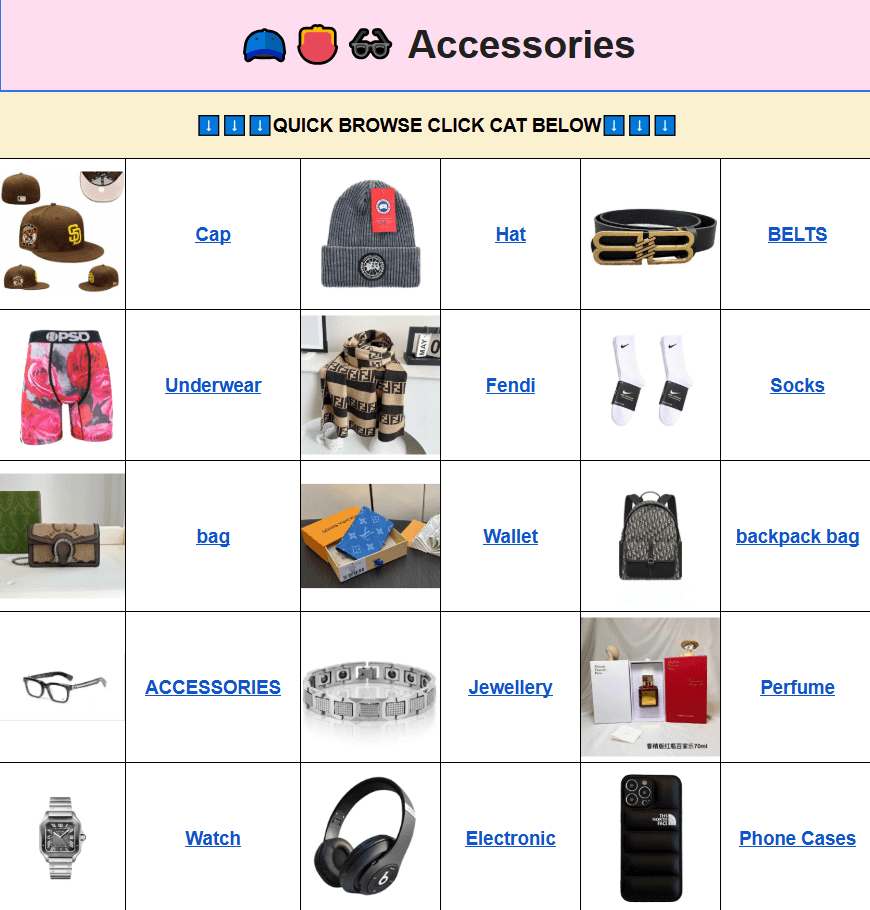
Product selection can also affect shipping choices. Certain categories may have special carrier restrictions, while some products are simply inefficient to ship because of their size or packaging. If you are comparing small accessories, for example, the shipping economics may look very different from a parcel dominated by large boxes or bulky items. The broader Kakobuy Spreadsheet Other Stuff category can be useful when browsing miscellaneous products that do not fit neatly into the major apparel groups.
A Lower-Risk Checkout Workflow for First-Time Buyers
For a first order, simplicity is usually more valuable than trying to optimize every variable immediately. A sensible workflow is to start with a manageable selection and learn how the purchasing and warehouse stages work before building a very large parcel.
1. Shortlist before purchasing
Save only products that meet your basic requirements for style, measurements, price and available information. Do not treat every interesting listing as an automatic purchase.
2. Verify the selected variation
Pay attention to dropdown selections. Color, size and model options can sometimes be easy to overlook, particularly when product pages contain many variations.
3. Keep measurements available
For clothing, compare seller measurements with a garment you already own that fits well. Measuring chest width, length, shoulders, sleeve length, waist or hip dimensions can provide a much stronger reference than a familiar size label.
4. Use QC as a decision point
When inspection information becomes available, check visible construction and obvious defects. If something looks inconsistent with the listing, investigate before moving the product into the international parcel.
5. Review the complete parcel
Before shipping, consider the combined weight and dimensions rather than evaluating each product independently. Consolidation can change the logistics calculation, particularly when packaging is bulky.
6. Read the shipping route conditions
Look at the route’s destination coverage, restrictions, tracking, tax arrangement and estimated transit information. Estimates are not guarantees, especially during peak periods or customs processing.
7. Confirm the destination information
Check the recipient name, address, postal code and contact details before submission. A small address error can create considerably more work once a parcel has entered the international delivery network.
Common Checkout Mistakes That Create Extra Work
Assuming the product price is the final cost. The product amount and international transportation are separate parts of the purchasing process. Destination taxes or other applicable charges may also need to be considered.
Choosing a size by label alone. A familiar XL does not necessarily correspond to the same measurements across manufacturers. Always prioritize dimensions when they are available.
Ignoring packaging. A product’s net weight is not necessarily the same as the final shipping weight. Boxes and protective packaging can change the parcel’s weight and dimensions.
Treating QC photos as proof of everything. Photos are valuable for visible inspection, but they cannot establish hidden material properties or guarantee long-term performance.
Picking a route solely because it is cheapest. The lowest quoted amount may not provide the service characteristics you actually need. Compare the full conditions attached to each available option.
Building an oversized first parcel. A very large first shipment can make it harder to understand where an unexpected problem originated. A more manageable initial order can make the process easier to learn.
Frequently Asked Questions
Q: How long does a first order take end-to-end?
A: There is no universal timeline. Product availability, seller handling, warehouse processing, QC, route selection, international transit and customs can all affect the total duration.
Q: How is international shipping calculated?
A: The calculation can depend on actual weight, volumetric weight, parcel dimensions, destination, selected route and the carrier’s pricing structure. The available estimate at ship-out is more useful than applying a generic price-per-kilogram assumption.
Q: Should I choose DDP or DDU?
A: Neither is automatically better for every destination. DDP-style arrangements can make the payment structure easier to understand when available, while DDU can leave certain import charges for the recipient. Read the route conditions and check your country’s current rules.
Q: Can I do QC review on a phone screen?
A: Yes, a phone is generally sufficient for checking obvious visual issues, selected variations and basic measurements. A larger screen can make fine details easier to inspect, so use the highest-resolution images available when something looks questionable.
Q: What is the safest first order size?
A: There is no universal ideal quantity. For a beginner, a manageable order is easier to inspect, consolidate and understand than an unusually large shipment. Start with an amount that lets you learn the workflow without making logistics unnecessarily complicated.
Q: What should I check after selecting an international route?
A: Review destination coverage, shipping method, estimated transit information, tracking availability, weight or volumetric rules, restricted-product conditions and how applicable taxes or duties are handled. Country-specific customs guidance should take priority over old community estimates.
Q: What should I do if a product does not look right in QC photos?
A: Pause before international shipment. Compare the photos with the original listing, selected variation and available measurements, then use the purchasing platform’s applicable procedures to determine whether another action is possible. Do not assume that every visible difference automatically qualifies for a refund or replacement.
The easiest way to make the checkout process predictable is to treat it as a sequence of decisions rather than one payment event. Verify the listing first, compare measurable specifications, inspect available QC information, understand the parcel’s weight and dimensions, and then evaluate international shipping based on your actual destination.
That approach is useful whether the destination is in North America, Europe, Australia, New Zealand or elsewhere. Shipping rules and carrier conditions change, but careful product selection and a methodical pre-ship review remain useful across markets.