Sourcing products directly through external supplier networks often leaves international buyers guessing about material finish, accurate measurements, and overall craftsmanship. Reviewing quality control inspection images before authorizing international dispatch solves this core issue. Understanding how Kako buy spreadsheet product entries pair with real-time warehouse photo verification transforms a speculative purchase into a predictable, confident order process.
Smart Search Tip: Looking for more? To find items instantly, use single-word keywords (e.g., “SHOES” or “T-SHIRT”) instead of long sentences for the best results.
Table of Contents
- The Sourcing Gap: Why Standard Listings Require Verification
- Key Inspection Points: What Photos Can and Cannot Reveal
- Evaluating Sizing, Fit, and Physical Dimensions
- Comparing Inspection Workflows: Raw Listings vs QC-Verified Databases
- International Shipping Risk Management and Pre-Shipment Adjustments
- Frequently Asked Questions
The Sourcing Gap: Why Standard Listings Require Verification
When browsing online catalog items sourced from domestic Chinese marketplaces, factory stock photos typically present ideal lighting, pinned silhouettes, and digital color enhancements. For an international buyer located in the United States, Europe, or Australia, ordering purely off marketing images creates significant uncertainty regarding what will actually arrive at the sorting facility.
The transition from a raw spreadsheet link to an organized database catalog helps narrow this gap. However, the true bridge between interest and confidence is the preliminary inspection photograph taken upon warehouse arrival. Seeing the item lying flat under natural warehouse lighting eliminates marketing polish and exposes structural details, actual fabric weight, and accurate color balance.
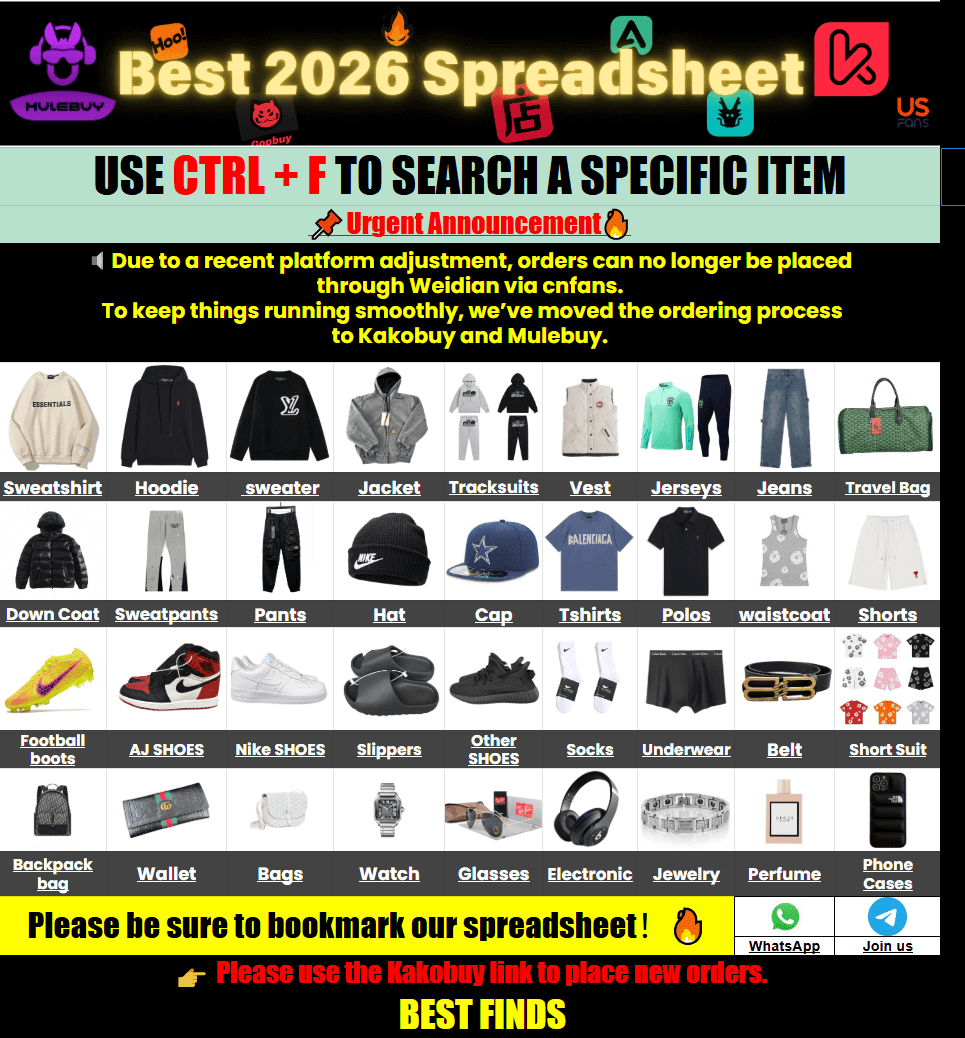
By reviewing these images prior to final international shipping approval, buyers prevent costly return shipping fees, resolve manufacturer errors early, and confirm that the item matches the intended specification batch before it crosses international borders.
Key Inspection Points: What Photos Can and Cannot Reveal
A structured approach to inspecting warehouse photos requires knowing where to focus and understanding the physical limits of a standard digital camera setup. While inspection photography is an essential tool, visual images cannot reveal every single physical trait of an item.
When checking items across popular categories like tech gear, travel goods, or everyday add-ons in the Kakobuy Spreadsheet Accessories section, specific visual markers provide clear indicators of manufacturing quality.
| Inspection Criteria | What Photos Confirm Well | What Photos Cannot Confirm |
|---|---|---|
| Stitching & Seams | Loose threads, alignment, skipped stitches, edge finishing | Long-term thread durability, elasticity under tension |
| Hardware & Zippers | Color matching, placement, finish quality, visible scratches | Smoothness of zipper track glide, weight of internal metal alloys |
| Branding & Prints | Alignment, print clarity, correct font spacing, color accuracy | Resistance to fading or peeling after multiple wash cycles |
| Materials & Texture | Surface finish, grain appearance, structural stiffness | Internal breathability, exact tactile softness, chemical odor |
Focusing on verifiable visual markers—such as seam alignment, crisp graphic borders, and clean hardware installation—ensures a practical inspection without expecting photos to guarantee long-term wear resistance or specialized fabric chemistry.
Evaluating Sizing, Fit, and Physical Dimensions
One of the most common pitfalls when ordering from international sourcing sheets is reliance on generic sizing labels like Medium or Extra Large. Batch sizing varies drastically across different factories and product lines, making numerical tags unreliable for predicting true fit.
High-value inspection images always incorporate physical measurement tapes laid directly across key garment parameters. Evaluating these actual dimensions against a well-fitting item from your current wardrobe provides absolute certainty before committing to parcel consolidation.
- Chest Width / Pit-to-Pit: Measured flat across the seam lines just below the armpits.
- Total Length: Measured from the highest point of the collar or shoulder seam down to the bottom hem.
- Shoulder Span: Measured horizontally from shoulder seam point to shoulder seam point.
- Insole / Footbed Length: Measured directly inside footwear to confirm true length regardless of the tag size printed on the tongue.
If an inspection photo shows a garment measuring 54 centimeters across the chest, comparing that flat measure directly against a comfortable t-shirt at home guarantees a precise fit, bypassing arbitrary manufacturer size tags completely.
Comparing Inspection Workflows: Raw Listings vs QC-Verified Databases
The efficiency of your sourcing workflow depends heavily on how product information and corresponding inspection data are accessed. Navigating massive, traditional spreadsheets often leads to broken links, missing batch details, and hidden product photos.
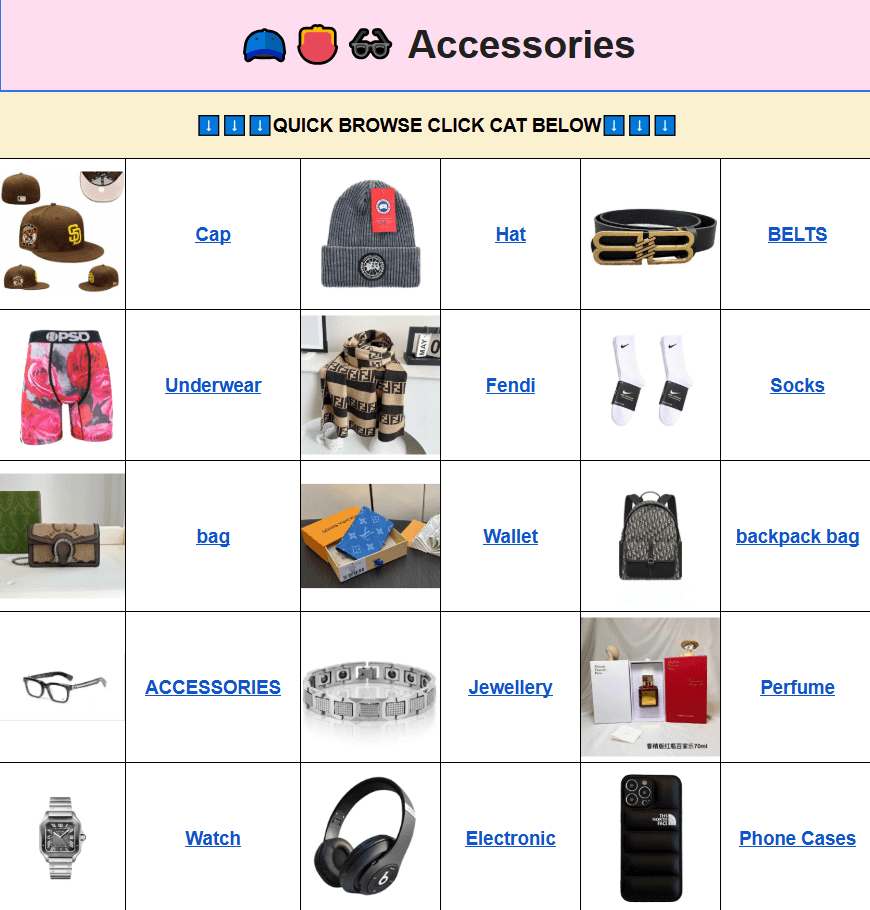
Modern web-based catalog structures streamline this process by pairing product entries directly with accessible inspection galleries and historical reference points.
| Workflow Feature | Standard Google Spreadsheet | Web Catalog System |
|---|---|---|
| Loading Performance | Slow loading times on mobile devices and large files | Optimized page loads with structured catalog layout |
| QC Photo Integration | Manual third-party links or missing visual references | Directly linked or embedded photo inspection previews |
| Searchability | Basic CTRL+F text search across unsorted rows | Category filters, keyword tags, and responsive search bars |
| Data Maintenance | Prone to broken links and deleted row entries | Centralized database structure with validated destination links |
Shifting from manual spreadsheet navigation to a structured catalog system minimizes time spent verifying links and maximizes time spent reviewing real product specifications and image details.
International Shipping Risk Management and Pre-Shipment Adjustments
The ultimate goal of pre-shipment photo inspection is risk mitigation. Once a parcel is packed, weighed, and cleared through international export facilities destined for North America, Europe, or Australasia, rectifying an incorrect item becomes logistically impractical and financially unfeasible.
When reviewing inspection photos at the warehouse stage, shoppers have clear recourse options:
- Requesting Detailed Re-inspection: Asking warehouse staff for close-up shots of suspicious seams, hardware, or tag details.
- Exchanging for Correct Dimensions: Exchanging an item immediately if ruler photos show the batch dimensions run smaller or larger than advertised.
- Direct Supplier Return: Rejecting an item showing clear defects, staining, or incorrect color variations before paying international freight fees.
Catching an issue while the item resides in a local origin warehouse costs minimal time and nominal local return freight, whereas discovering a flawed item after paying international shipping charges leads to complete loss. Paying careful attention to quality control photos remains the single most effective way to protect your budget when ordering via international sourcing catalogs.
Frequently Asked Questions
Q: What are warehouse QC photos?
A: Warehouse QC (Quality Control) photos are high-resolution inspection pictures taken by staff when your ordered item arrives at the domestic processing facility. They allow buyers to review physical attributes, color, and sizing measurements before shipping the item overseas.
Q: Can I request specific measurement photos for my order?
A: Yes, most logistics agents allow users to request detailed photo angles or precise ruler placement across specific parts of an item, such as shoulder width or total insole length, for a small additional processing fee.
Q: What should I do if the QC photos reveal a defect or wrong size?
A: If inspection photos show an obvious defect, incorrect color, or wrong measurement, you can initiate a domestic return or exchange through your forwarding account dashboard before authorizing international dispatch.
Q: How do QC photos help lower overall sourcing costs?
A: By identifying incorrect sizes or damaged goods while the product is still at the origin facility, you avoid paying expensive international parcel shipping fees on items you would ultimately be unable to use.
Q: Are QC photos accurate representations of physical color?
A: Inspection photos provide a clear look at general color tone, but warehouse overhead lighting can occasionally cause minor shifts in shade appearance. Comparing photo details under balanced lighting offers the most reliable visual baseline.